
Minecraft’s Infinite Worlds Come Down to Mathematics — and That’s Beautiful
Minecraft’s world generator can create quintillions of unique worlds—a number so large it’s hard to comprehend. But the number itself isn’t what matters.
Minecraft’s world generator can create quintillions of unique worlds—a number so large it’s hard to comprehend. But the number itself isn’t what matters.

Over a decade later, no open-world game has copied GTA V’s three-protagonist structure. The reason isn’t that the ideas were bad—they were too expensive to execute well.
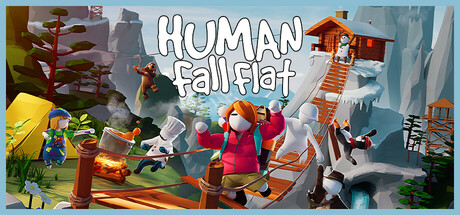
Human Fall Flat shouldn’t work. The physics are deliberately broken, the protagonist controls like a drunk ragdoll, and half your playtime is spent watching your character slide off a ladder.

CrossFire has millions of concurrent players. Almost none are in North America. That fact tells you everything about how the weapon economy works for price-sensitive markets.

In Counter-Strike, a few hundred dollars is the difference between an eco round and a buy round—and that number was chosen deliberately.

I’ll admit something that might get me kicked out of certain gaming circles: I spent dozens of hours tracking machine override data in a spreadsheet. Not because I had to, but because Guerrilla Games buried so much complexity.

I subscribed to World of Warcraft in 2004. I’ve unsubscribed and resubscribed more times than I care to count. And every time I think I’m done, an expansion launches or a major patch drops, and I’m back.

NBA 2K’s virtual currency system works beautifully. It’s also designed to extract as much money as possible from players who want to compete. Understanding how VC behaves differently in each mode reveals why the monetization works so effectively.

Skill-based matchmaking in Call of Duty is the most hated feature in the franchise. It’s also the feature that keeps the game alive. The system works exactly as designed.

Fifteen years after release, Left 4 Dead 2 still has more daily players than most games released last month. Nobody can fully explain why.